A Different View

The view of a Sri Lankan studying in America

Saturday, February 23, 2008

A survivor


I have always admired Tony Blair. I think he is one of the most astute politicians ever. I admire him the most though for his survival skills. His role in the Iraq War and support for Bush's foreign policy came at great cost to his popularity. The more the war dragged on and the more revelations about his role in it came out, the more people started questioning his credibility. The result was a lot of people, including some in his own party openly turning against him. There were constant calls for his resignation as Prime Minister. However he deftly survived the onslaught and despite all the pressure, left politics on his own terms. This ability to keep ones head above the water is a quality that I very much admire.

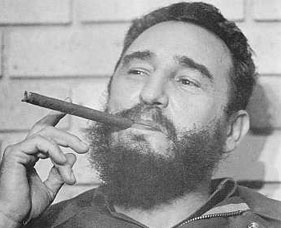
In the last week I have come to realize that there is another politician who should get as much (if not more) admiration in my book. I am referring to Fidel Castro. He has survived much more than the onslaught of the British public and media. He survived the American propaganda against him, American attempts at inciting the Cuban population against him, an offense by the American military and a good number of covert assassination attempts by the CIA. Heck, he even survived Bush's obsession for the spread of "freedom". He finally retired on his terms after over 50 years in power. He is definitely a survivor in my book.

Sunday, February 03, 2008

The "Rot at the Top"

One of the four characteristics of Americans that we have studied is the idea of "the rot at the top". This is a belief that Americans share - the idea that if there is something wrong with an organization or institution, removing the person at the top, ie the leader will solve it. This idea is attributed to the uniqueness of the American experience and plays a huge role in how Americans look at the world - often reflected in foreign policy. The most recent example is Iraq, where there was, and still is a widespread belief that taking out Saddam will solve everything. This is one of the reasons why there was so much focus on the execution of the war and taking Saddam out with minimum casualties. This belief also seems to me to be one of the reasons why Americans are unable to indulge in "nation building".

However, reading articles about how people outside the US are looking at the American presidential election process, I question whether this idea is truly American anymore. The impression I get is that people the world over want change and they think that the exit of Bush means that all the problems they perceive to be a result of his presidency will disappear. Isn't this in some way espousing the idea of "the rot at the top"? Is it just a desperation for change or has the strength of American influence on the process of globalization actually spread more than just "American values"?

Either way, change is always incremental and whoever the next president is and whatever his/her campaign promise, nothing significant is going to change fast. Besides, the bureaucracy is so vast and the special interests are so powerful that it might take months for any satisfactory change, if any.

Personally, I hope this idea that getting rid of Bush will solve everything is just a desperation for change rather than adoption of the idea of "the rot at the top" because it is not true in most cases and is a dangerous ideal to have. If anything, Iraq has proven that.